Call Us Today!
(86) 13523337775 |
ayzhyjnc888@gmail.com

Analysis of Ferroalloy Production and Consumption in 2025 and Outlook for 2026
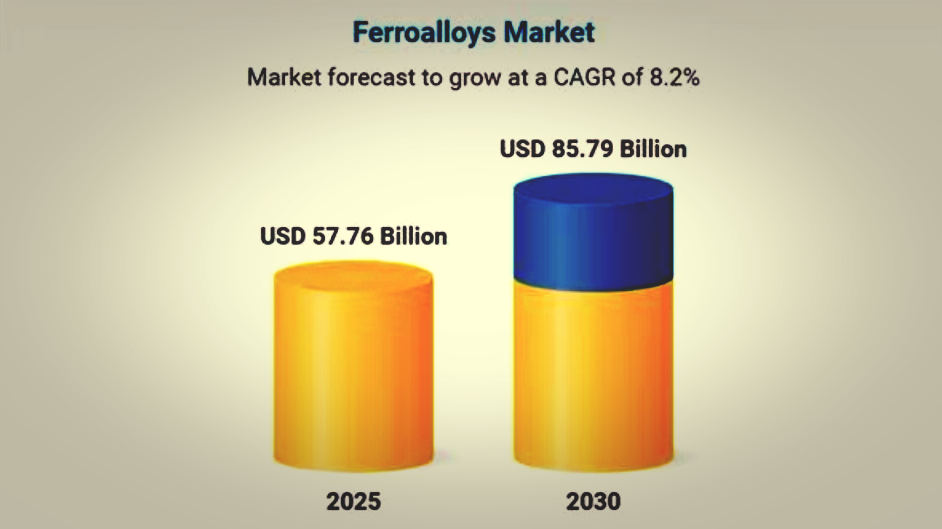
As an important raw material for the steel industry, the production and consumption of ferroalloys are directly affected by the global economic situation, steel demand and environmental protection policies. In 2025, the global ferroalloy industry is expected to operate in a context of coexistence of challenges and opportunities, while the development in 2026 may be further driven by technological progress and market structure adjustment. The following is an analysis of ferroalloy production and consumption in 2025 and an outlook for 2026.
Analysis of ferroalloy production in 2025
In 2025, global ferroalloy production is expected to remain relatively stable, but regional differences will be significant. According to the trend in recent years, China, as the world’s largest ferroalloy producer, will continue to dominate production. However, as China’s crude steel production is affected by policy regulation (such as the “dual carbon” target) and the sluggish real estate market, domestic demand for ferroalloys may be suppressed to a certain extent, resulting in a slowdown in production growth. It is expected that China’s ferroalloy production will maintain an average annual level of 45 million to 48 million tons in 2025, a slight decline compared with 2024.
In other regions, such as India and Southeast Asian countries, ferroalloy production is expected to grow slightly due to the continued advancement of infrastructure construction and the acceleration of industrialization. India may add about 2 million tons of new production capacity in 2025 to fill part of the market vacancies caused by China’s production cuts. In Europe and North America, production growth is limited due to stricter environmental regulations and high energy costs, and may even decline slightly.
Analysis of ferroalloy consumption in 2025
The consumption of ferroalloys is mainly concentrated in the field of steel production, especially the production of special steel and stainless steel. In 2025, global steel demand is expected to be affected by multiple factors. According to forecasts by international economic organizations, the global economic growth rate may stabilize at around 3.3% in 2025, and emerging economies in Asia will become the main driving force. This will drive steel demand in industries such as construction, automobiles and machinery manufacturing, thereby supporting ferroalloy consumption.
In China, the continued downturn in the real estate market may drag down crude steel demand, which in turn affects ferroalloy consumption, and annual consumption is expected to fall back to 40 million to 42 million tons. In contrast, ferroalloy consumption in India and Southeast Asian countries may increase by 5%-8%, mainly due to the expansion of infrastructure projects and manufacturing. Demand in Europe and the United States is relatively stable, relying more on the need for special ferroalloys in high-end manufacturing.
It is worth noting that the acceleration of the global electrification trend in 2025 (such as electric vehicles and renewable energy equipment manufacturing) will increase the demand for manganese and silicon ferroalloys. This may become a highlight of consumption growth, but the overall increase will not significantly change the market structure.
Outlook for the ferroalloy industry in 2026
Looking forward to 2026, the ferroalloy industry may usher in a new stage of structural adjustment and technology-driven. First, with the further development of global renewable energy and nuclear energy, the low carbonization of the power industry will indirectly affect the production cost and demand structure of ferroalloys. It is expected that by 2026, the gradual promotion of green steel production technologies (such as hydrogen metallurgy) will reduce dependence on traditional ferroalloys and generate demand for new alloy materials.
Secondly, the uncertainty of raw material supply will become a key variable. The price fluctuations of upstream resources such as iron ore and manganese ore, as well as the possible supply chain disruptions caused by geopolitical factors, will put pressure on ferroalloy production in 2026. Especially outside China, capacity expansion may be constrained by the increasing difficulty of resource acquisition.
In terms of market demand, if the global economy can continue its recovery momentum in 2026, the consumption of ferroalloys is expected to achieve moderate growth. Asia will remain the main market, while Europe and North America may seek breakthroughs in the field of high-end alloys. In addition, environmental protection policies will further promote the concentration of the industry, small and high-polluting enterprises may accelerate their exit from the market, and large enterprises will occupy more shares through technological upgrading.
Conclusion
The ferroalloy industry in 2025 will operate under the pattern of stable output and regional differentiation of consumption. The adjustment of the Chinese market will contrast with the growth of other emerging markets. Looking forward to 2026, technological progress and low-carbonization trends will bring new development directions to the industry, but also accompanied by challenges in resources and costs. For enterprises, optimizing production efficiency, developing green technologies and seizing regional market opportunities will be the key to future competition.